Mortise and Tenon Joinery Explained: Why It Still Beats Modern Fasteners
Article
Ipul
7/26/20262 min read
Mortise and Tenon Joinery Explained: Why It Still Beats Modern Fasteners
Walk into most furniture stores today and you'll find pieces held together with screws, dowels, staples, and glue — fast to produce, but not always built to last. In Jepara's teak workshops, one joinery method has remained the standard for generations, precisely because nothing modern has replaced it in terms of long-term strength: the mortise and tenon joint.
What a Mortise and Tenon Joint Actually Is
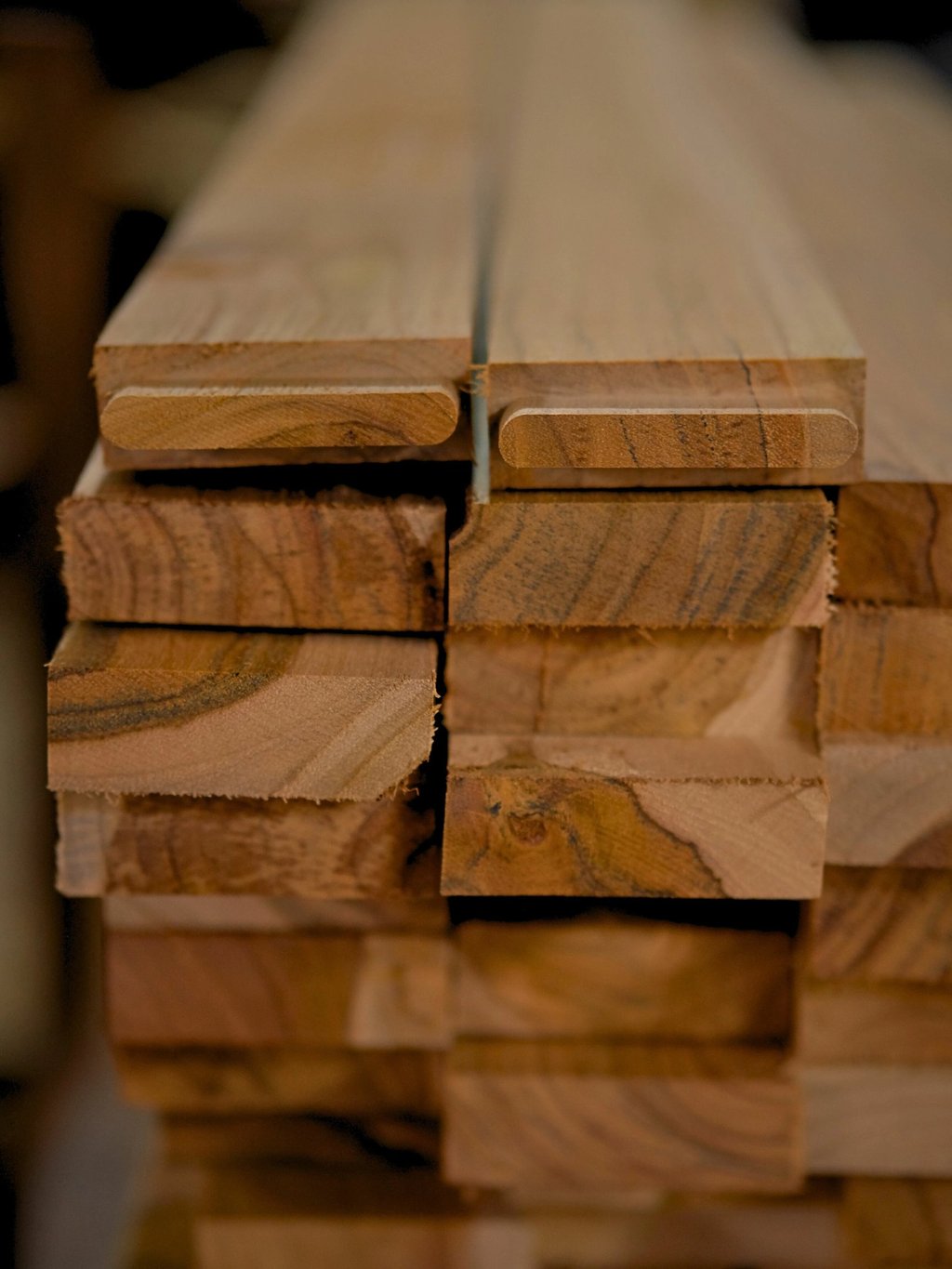
The concept is simple. One piece of wood has a slot cut into it (the mortise), and the connecting piece is shaped with a matching protruding tongue (the tenon) that fits snugly inside. When cut correctly, the joint holds largely through the tightness of the fit itself, reinforced rather than solely held together by glue or fasteners.
Why It Outlasts Screws and Brackets
Screws and metal brackets create a single point of stress concentrated at the fastener. Over years of seasonal wood movement — expansion and contraction with humidity — that concentrated stress point is where furniture typically fails first: a stripped screw hole, a cracked bracket mount, a wobble that gets progressively worse. A well-cut mortise and tenon joint distributes stress across a much larger surface area, and because both pieces of wood move together rather than against a rigid metal fastener, the joint tends to age more gracefully.
Why It's Still Cut by Hand in Jepara
Precision matters enormously here — too loose and the joint wobbles, too tight and it can crack the wood during assembly or seasonal expansion. In Jepara workshops, craftsmen typically combine machine-cut rough shaping with hand-chiseled final fitting, using traditional tools to achieve a tolerance that fully automated production often can't match for one-off or custom pieces.
Where You'll See It
Mortise and tenon joinery shows up throughout solid teak furniture — chair frames, table legs and aprons, cabinet frames, bed frames — anywhere two structural wood pieces need to meet at a right angle and bear real weight or repeated stress over time.
How to Check for It as a Buyer
You often can't see a mortise and tenon joint directly in a finished piece, since it's internal to the construction. Ask your supplier directly: "Is this joined with mortise and tenon, or primarily glued and fastened?" A workshop confident in its construction — such as Sebatik Carpentry in Jepara, which uses mortise and tenon joinery as a standard part of its assembly process — should be able to answer without hesitation.
The Bottom Line
It's not the fastest way to build furniture, and it's part of why handmade teak pieces cost more than mass-produced alternatives. But for furniture meant to survive decades of use — indoors or outdoors — it remains the method that has consistently outperformed anything faster.
---
Sources & References
- Sebatik Carpentry, "The Teak Wood Furniture Making Process at Sebatik Carpentry" — explanation of mortise and tenon joinery used during the assembly stage. [sebatikcarpentry.com](https://www.sebatikcarpentry.com/the-teak-wood-furniture-making-process-at-sebatik-carpentry)
- SurenSpace, "How To Import Wooden Furniture From Indonesia?" — buyer guidance on evaluating joinery methods (mortise-and-tenon, dovetail, or simpler fasteners) for durability. [surenspace.com](https://surenspace.com/blog/how-to-import-wooden-furniture-from-indonesia/)