
Postingan blog
Deskripsi blog
7/10/20265 min read
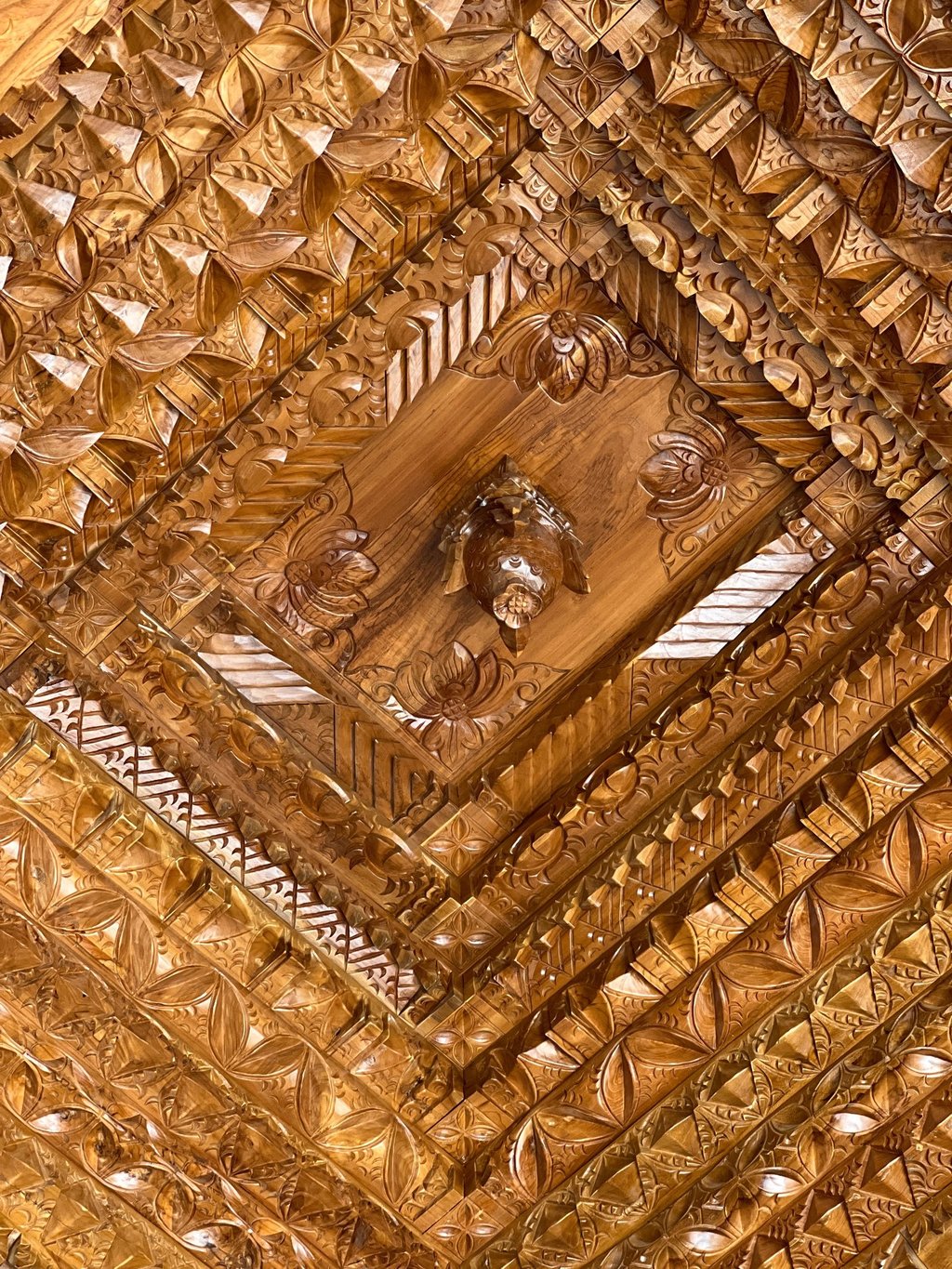
Masjid Mantingan: The Quiet 16th-Century Mosque That Turned Jepara Into a City of Carvers
A few kilometers south of downtown Jepara, tucked into the village of Mantingan in Tahunan district, sits a small mosque that most visitors would walk past without a second glance. No towering minarets, no crowds, just weathered stone walls and a shaded courtyard. But if you slow down and actually look at those walls, you start to understand why local historians consider this modest building the real starting point of everything Jepara is known for today.
This is Masjid Mantingan, also known as Masjid Astana Sultan Hadlirin. And its story is less about architecture and more about grief, migration, and an accidental gift to Indonesian craftsmanship that nobody could have predicted at the time.
A Mosque Born From Loss
To understand Mantingan, you have to go back to the mid-1500s, when Jepara was governed by a woman named Ratu Kalinyamat, daughter of Sultan Trenggono of the Demak Sultanate. She ruled Jepara alongside her husband, Sultan Hadlirin, a prince believed to have Chinese heritage who arrived in Java by way of the Aceh Sultanate.
Their partnership didn't last. In 1549, Sultan Hadlirin was killed by soldiers loyal to Arya Penangsang, a rival caught up in the messy succession politics that followed the death of Demak's ruling family. Ratu Kalinyamat was devastated. According to local chronicles, she vowed to meditate in seclusion until her husband's killer was brought to justice, and as a lasting tribute to him, she commissioned a mosque and tomb complex at Mantingan.
Construction wrapped up in 1559, a date we know with unusual precision thanks to a candrasengkala, a chronogram inscription carved into the mihrab that reads "Rupa Brahmana Warna Sari," corresponding to the Saka year 1481. That makes Mantingan the second-oldest mosque in Central Java, right after the Great Mosque of Demak.
The Architect Nobody Expected
Here's where the story gets interesting. Tradition holds that the mosque's design and stone carvings weren't the work of a Javanese architect, but of a man named Tjie Wie Gwan, a Chinese craftsman better known by his honorific title, Patih Sungging Badarduwung. He was reportedly Sultan Hadlirin's adoptive father figure from his time studying and traveling abroad, and he brought a distinctly Chinese sensibility to the project, right down to importing yellow sandstone panels from China for the relief carvings.
Dutch historian H.J. de Graaf noted that a significant number of Chinese workers were involved in building the mosque, a claim reinforced by the carvings themselves. R.A. Kartini, Jepara's famous women's rights pioneer, even mentioned this in her own writing. In her letters compiled in Door Duisternis tot Licht, she recalled visiting Mantingan and noticing how the houses and ornamental motifs around the mosque carried unmistakable Chinese influence.
The result is a building that doesn't look like a typical Javanese mosque at all. It blends Hindu-Buddhist, Chinese, and Islamic elements in a way that feels almost accidental, layered atop the older Majapahit-era architectural tradition of tiered roofs and soko guru pillar construction, but dressed in ornamentation that came from somewhere else entirely.
The Carvings That Started It All
This is the part of the story that matters most if you're at all curious about Jepara's identity as Indonesia's furniture and carving capital.
The stone reliefs lining Mantingan's veranda depict a strange, beautiful mix of motifs: lotus flowers, coconut trees, horses, phoenixes, peacocks, bats, monkeys, mountains, and geometric patterns built from circles, hexagons, and interlocking spirals. Some panels are square, others round, a few shaped like bats. Originally there were 114 of these reliefs; 51 remain mounted on the mosque today, with the rest preserved in a small on-site museum.
What makes this significant isn't just their age or their beauty. Later research, including work published in Universitas Negeri Semarang's Jurnal Imajinasi, argues that the floral and faunal motifs on these panels were gradually absorbed and reinterpreted by local carvers, eventually evolving into the relung (scroll and tendril) patterns that define traditional Jepara woodcarving to this day. In other words, before Jepara had furniture workshops or export contracts, it had these stone panels quietly sitting on a mosque wall, being studied and copied by generations of local artisans until carving became second nature to the whole region.
It's worth being honest here: not every historian agrees on how directly the Mantingan carvings shaped Jepara's craft identity. Some local researchers point out that the oral tradition connecting the two is strong, but the written historical record is thinner than people assume, and it's unclear whether the original carvings were even made on-site or brought in already finished. Still, the symbolic link is one that Jepara's own carving community has embraced for generations, and it's hard to visit the mosque and not see the resemblance.
More Than a Monument
Beyond its role in carving history, Mantingan functions as a living religious site. The complex includes the mosque itself, a walled cemetery, and that small museum, all connected by a gapura bentar, the split gateway style borrowed from Majapahit temple architecture. Buried within the tomb complex are Sultan Hadlirin, Ratu Kalinyamat, Patih Sungging Badarduwung, and Syekh Abdul Jalil, among others.
The site has been restored more than once, first in 1927 and again between 1977 and 1981, when conservators uncovered six additional relief panels along with white stone blocks and older foundations buried beneath the current structure. President Sukarno himself visited the tomb in 1952, a visit still commemorated with a photograph displayed at the local regency office.
Locals also attach folklore to the site. There's a mengkudu (noni) tree near the grave said to help couples struggling to conceive, and a spring known as Air Mantingan, believed to reveal truth in disputes when consumed with the right prayers. Whether or not you put stock in that kind of tradition, it says something about how deeply this small mosque is woven into the daily life and identity of the community around it, not just as a historical relic, but as a place people still turn to.
Why This Matters If You Care About Jepara Craftsmanship
If you've ever admired a piece of hand-carved teak furniture from Jepara and wondered where that intricate, flowing style actually came from, Mantingan is as close to an origin point as you'll find. It's a reminder that Jepara's reputation as Indonesia's carving capital wasn't built in a factory or a marketing campaign. It grew out of grief, cross-cultural exchange, and a handful of stone panels that generations of local artisans simply couldn't stop looking at.
Further Reading & Sources
Academic Research
Arifin, Zainul, Jati Widagdo, & Fivin Bagus SP. (2019). Budaya Rupa Motif Ukir Masjid Mantingan pada Mebel Ukir Jepara. Imajinasi: Jurnal Seni, Universitas Negeri Semarang, Vol. 13, No. 2.
Putra, Eko Roy Ardian. (2018). Makna Simbolis pada Ragam Hias Masjid Mantingan di Jepara. Program Studi Desain Interior, Institut Seni Indonesia (ISI) Yogyakarta.
De Graaf, H.J. & Th.G.Th. Pigeaud. (1985). Kerajaan-Kerajaan Islam di Jawa. Jakarta: Grafiti.
Gustami, SP. (2000). Seni Kerajinan Mebel Ukir Jepara. Yogyakarta: Kanisius.
Sejarah dan Hari Jadi Jepara (1988), Pemerintah Kabupaten Jepara.
Primary & Archival Sources
Kartini, R.A. Door Duisternis tot Licht (translated editions available), pp. 164–165.
Sistem Registrasi Nasional Cagar Budaya, Kementerian Pendidikan dan Kebudayaan — Kompleks Mantingan
Direktorat Pelindungan Kebudayaan — Masjid Mantingan, Persembahan Sang Ratu untuk Sang Suami
Web Sources